Product Solutions
Product solutions
Your Trusted Partner in Advanced Material Handling Solutions.
Your Trusted Partner in Advanced Material Handling Solutions.

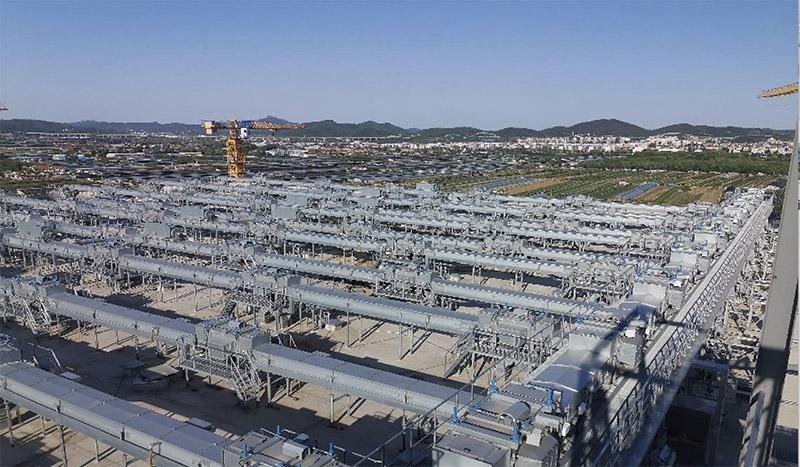
Grain Terminal Santa Marta vessel loading conveying line
Located at the SP SANTA MARTA – DRY BULK PORT
Capacity: 1,200 Ton/h
Enclosed belt conveyor – self-cleaning
Bucket elevators
Chain conveyors
Project snapshot
- Location: SP Santa Marta dry bulk port
- Application: grain terminal conveying line for vessel loading
- Rated capacity: 1,200 tonnes per hour
- Equipment supplied: enclosed self-cleaning belt conveyors, bucket elevators, chain conveyors
What a vessel loading line has to deliver
A grain terminal is judged on one number above all others: how many tonnes it can put into a ship's hold before the berth window closes. At 1,200 tonnes per hour, a continuous delay of even a few minutes is measured in thousands of tonnes of lost loading capacity, and demurrage is charged by the hour. That changes the engineering priorities. The line does not need to be clever - it needs to start on the first attempt, hold rated throughput for the whole shift, and tolerate the dust, humidity and salt air of a working bulk port without constant intervention.
How the line is arranged
The route combines three machine types, each chosen for the job it does best. Grain arriving from storage is lifted vertically by bucket elevators, which move large volumes up a small footprint and keep the material fully enclosed while it rises. From the elevator head, an enclosed belt conveyor carries the grain along the horizontal jetty runs toward the loading point, where discharge can be distributed through a plough tripper rather than shuttling a whole conveyor. Where the route has to handle heavier duty, change direction or work in a confined space, chain conveyors take over and move material by dragging it through a sealed casing.
Why the conveyors are enclosed - and self-cleaning
At a dry bulk port, two problems dominate: dust and spillage. Grain dust is combustible, it is a hygiene and neighbour complaint waiting to happen, and every kilogram that escapes the belt is product the terminal has already paid for. Enclosing the carrying side of the conveyor keeps fines inside the machine, and ducting it to the terminal's dedusting system captures them at source rather than after they have settled on the jetty. The self-cleaning design addresses the second half of the problem: material that would normally cling to the return side and drop under the conveyor is removed mechanically, so the structure below the belt stays clear and the cleaning shift becomes an inspection shift instead.
Feed and transfer points are the highest-risk locations on any grain route, which is why a dust suppression hopper at the in-feed is worth specifying alongside the conveyors themselves. Controlling dust where the material enters the system is far cheaper than chasing it along the whole jetty.
Keeping 1,200 t/h available
At this throughput, wear is a scheduling problem rather than a surprise. Bucket elevator belts and buckets, conveyor belting, chain and flight wear surfaces and discharge chute liners all have finite lives, and on a line this size the cost of a mid-shipment stop dwarfs the cost of the parts. The practical approach is to define the wear items at the design stage, hold critical spares on site before the first vessel, and inspect on a fixed calendar instead of waiting for a symptom. Elevator boot sections and conveyor transfer points deserve the closest attention, because they see the highest material velocity and the most abrasive wear.
What to carry into your own project
Three decisions make the difference on a terminal line of this kind. First, fix the rated capacity in tonnes per hour and design the whole route - elevator, conveyor, chute and discharge - to that single number, instead of allowing one under-sized section to throttle the line. Second, enclose the route from intake to loading point and treat dust capture as part of the machine rather than an add-on. Third, plan the maintenance and spares package before commissioning, not after the first breakdown. Ports that do all three load ships on schedule; ports that skip one of them spend their berth windows waiting on a conveyor.
Planning a similar terminal line?
Tell us your material, rated capacity, berth layout and site constraints, and our engineers will put together a proposal with the machine selection, the dust control approach and a budget price.
WhatsApp: +86 150 3816 6007
Website: www.recenstec.com